

En parcourant le Cambodge, on remarque rapidement la présence des femmes dans tous les aspects de la vie quotidienne. Sur les marchés, dans les petits commerces, dans les ateliers ou au sein des familles, elles occupent une place essentielle dans la société et l’économie du pays.
Pourtant, cette place s’inscrit dans une histoire complexe. Au fil des siècles, le rôle des femmes dans la société cambodgienne a évolué entre traditions, religion, contraintes sociales et changements politiques.
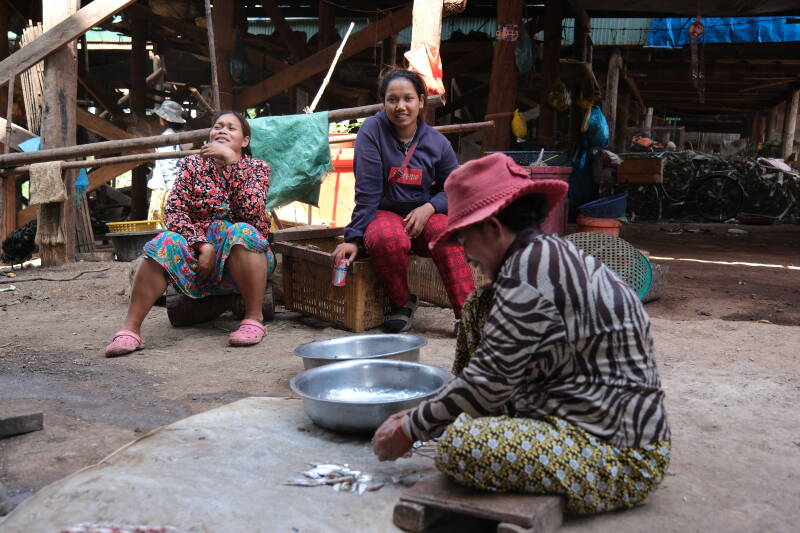
© Justine Clenet
Femmes discutant et préparant du poisson à l'arrière d'un marché, 2023 - Women chatting and preparing fish at the back of a market, 2023
Des femmes importantes dans les premières sociétés khmères
Dans les sociétés pré-angkoriennes, les femmes semblent avoir occupé une place importante dans la famille et dans les structures sociales. Certains éléments historiques et récits traditionnels évoquent des systèmes de filiation et de transmission passant par les femmes.
La figure de la reine Soma, associée aux récits fondateurs du royaume du Funan, témoigne notamment de cette place symbolique. Dans les traditions et les légendes, les femmes peuvent ainsi apparaître comme des figures à l'origine du pouvoir et de la continuité dynastique.
À l’époque d’Angkor : des femmes très présentes, mais une société hiérarchisée
Entre le IXe et le XVe siècle, les femmes sont largement représentées dans l'art et la religion khmers. Il suffit d'observer les temples d'Angkor pour mesurer leur importance dans l'imaginaire de l'époque.
Les apsaras, ces figures féminines célestes sculptées sur les murs des temples, représentent la beauté et la grâce dans la cosmologie hindoue. Mais au-delà des représentations religieuses, certaines femmes occupent également des positions importantes dans la société. Les inscriptions retrouvées dans les temples mentionnent notamment des femmes propriétaires de terres, commerçantes ou exerçant des responsabilités religieuses.
La réalité sociale reste toutefois très hiérarchisée et ne peut pas être résumée à une simple opposition entre hommes et femmes. Le statut des femmes varie selon leur origine sociale, leur fonction et leur période.
Le poids des traditions
À partir du développement du bouddhisme theravada dès 1336, devenu progressivement dominant au Cambodge, les représentations du rôle féminin évoluent également. Dans la société traditionnelle, les femmes sont fortement associées à la famille, à la gestion du foyer et n’ont que très peu accès à une éducation.
Cette conception est notamment présente dans le Chbab Srey, un texte traditionnel consacré aux règles de conduite attendues des femmes. Il valorise la modestie, la discrétion, et le rôle de la femme au sein du foyer. Il préconise également la soumission à son mari, la femme lui devant respect et obligation de veiller à son bonheur. Selon un proverbe khmer, “Les filles n’ont pas les jambes longues comme les garçons. Elles ne peuvent que faire le tour du fourneau.”
Pendant longtemps, ces enseignements ont fait partie de l'éducation des jeunes filles. Certains extraits du Chbab Srey ont même été enseignés à l'école jusqu'au début des années 2000.
Mais ces traditions sont plus nuancées dans la réalité. Dans certaines familles, les femmes ont toujours participé à l'économie familiale, au commerce et aux activités agricoles, et leur rôle dépasse largement celui de gardienne du foyer.
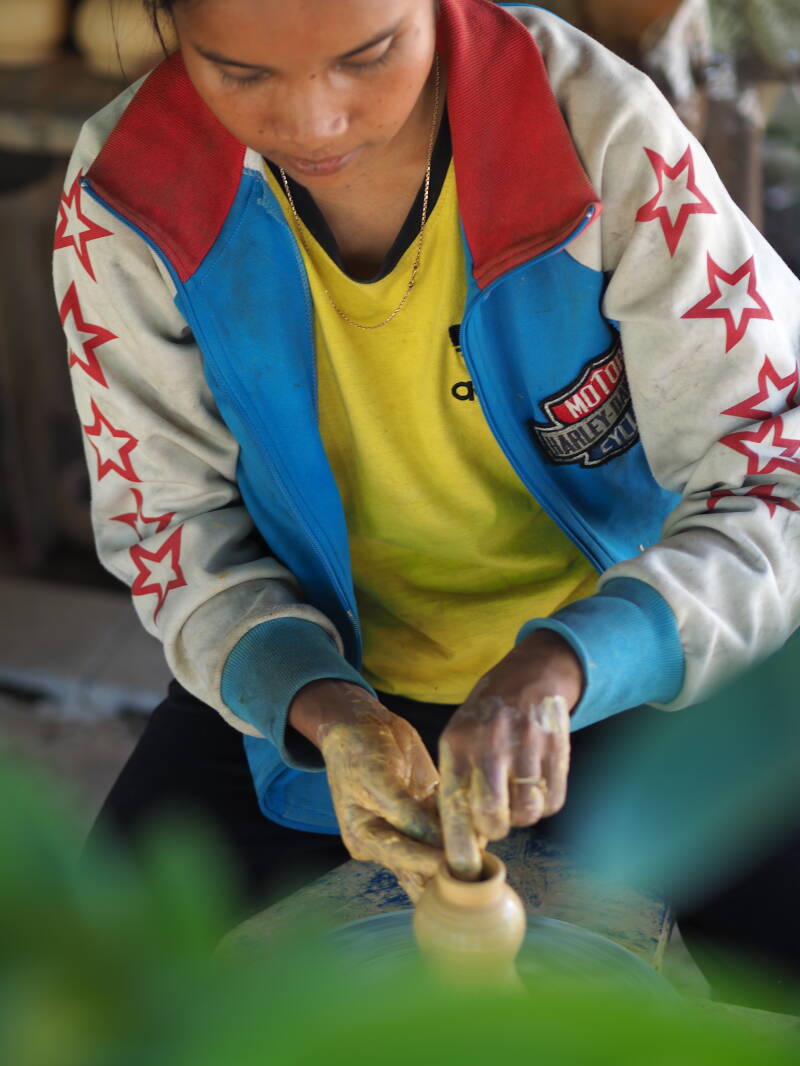
© Justine Clenet
Femme potière travaillant dans le village de Kampong Chhnang, 2022 - Woman potter working in the village of Kampong Chhnang, 2022
Du protectorat à l'indépendance
Pendant la période du protectorat français, l'accès des filles à l'éducation reste limité et les femmes sont peu présentes dans la vie publique. Après l'indépendance en 1953, des progrès sont réalisés, notamment dans l'accès à l'éducation et à la vie professionnelle, mais les femmes restent encore largement cantonnées à des rôles traditionnels. Ces évolutions sont brutalement interrompues par les bouleversements politiques des années 1970.
Une génération marquée par les Khmers rouges
Sous le régime des Khmers rouges, entre 1975 et 1979, les femmes comme les hommes sont soumis au travail forcé et aux conditions extrêmement difficiles imposées par le régime. Les structures familiales sont profondément bouleversées et le mariage lui-même est contrôlé par les autorités.
Les femmes subissent également des violences spécifiques, notamment des violences sexuelles, dont l'ampleur a longtemps été difficile à documenter. Cette période a laissé des traces profondes dans les familles et dans la société cambodgienne.
Après 1979, le pays doit reconstruire ses institutions, son système éducatif et ses structures sociales. Les générations suivantes grandissent donc dans une société où se mêlent les traditions héritées du passé et la nécessité de reconstruire après plusieurs décennies de conflit.
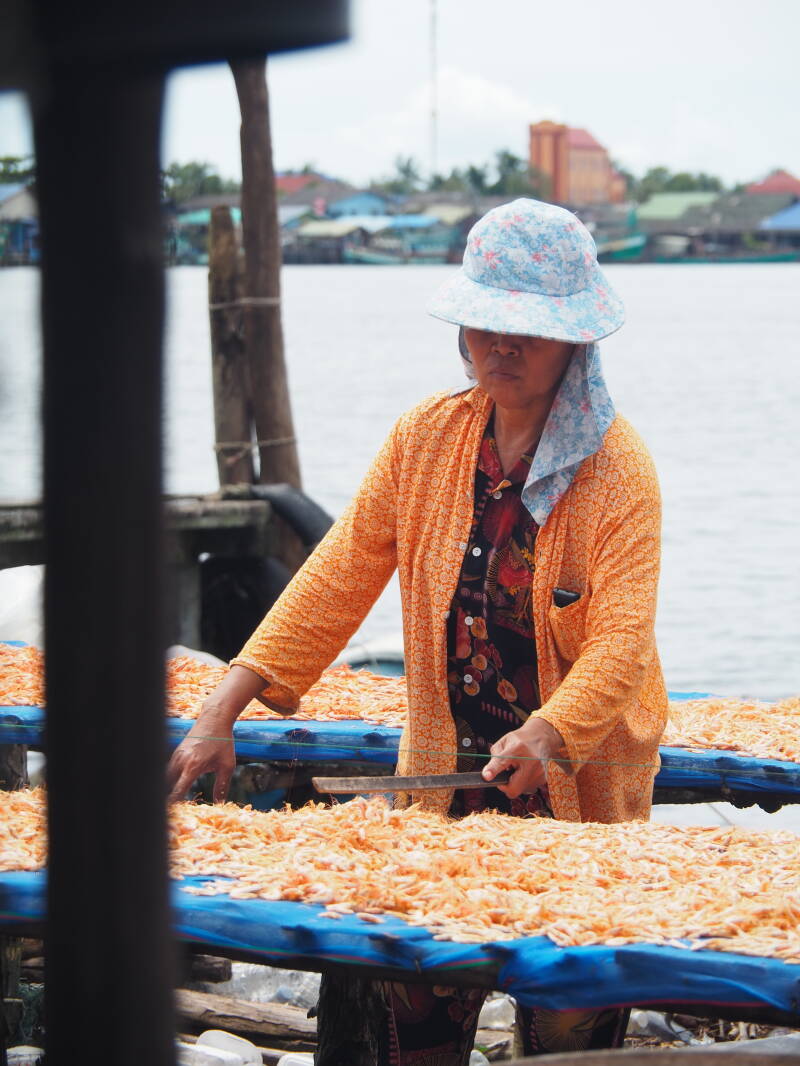
© Justine Clenet
Femme faisant sécher des crevettes à Kep, 2023 - Woman drying shrimp in Kep, 2023
Les femmes cambodgiennes aujourd'hui
Aujourd'hui, les femmes jouent un rôle majeur dans l'économie cambodgienne. Elles sont particulièrement présentes dans le commerce, le travail indépendant, l'artisanat, l'agriculture et le secteur textile. Elles sont également de plus en plus nombreuses à accéder à l'enseignement supérieur et à des postes à responsabilités.
Les progrès restent cependant inégaux. Les femmes sont encore davantage représentées dans les emplois informels et moins rémunérés, tandis qu'elles restent minoritaires dans les postes de direction et dans les instances politiques nationales. En février 2024, les femmes occupaient 13,6 % des sièges du Parlement cambodgien.
Les normes sociales continuent également de peser sur leur quotidien. La répartition des tâches domestiques reste très inégale : selon les données d'ONU Femmes, les femmes consacrent une part beaucoup plus importante de leur temps au travail domestique et aux soins non rémunérés que les hommes.
Les violences faites aux femmes restent également un enjeu important. Le Cambodge dispose depuis 2005 d'une loi sur la prévention des violences domestiques et la protection des victimes, mais la prévention, l'accès aux services et l'application des dispositifs restent des sujets de travail pour les institutions et les associations.
Dans le même temps, les mentalités évoluent. De nouvelles générations de femmes poursuivent leurs études, développent leurs propres activités professionnelles et prennent davantage la parole dans l'espace public. Des programmes récents encouragent également une évolution des pratiques familiales et éducatives, notamment vers des relations moins fondées sur l'autorité et les violences physiques.
Observer la place des femmes au Cambodge, c'est donc découvrir une société en équilibre entre héritage et transformation. Les traditions restent présentes, mais elles sont progressivement réinterprétées par une nouvelle génération qui cherche sa propre manière de vivre, de travailler et de prendre sa place dans la société.
Women in Cambodian Society
As you travel through Cambodia, you quickly notice the presence of women in every aspect of everyday life. In markets, small shops, workshops, and family homes, women play an essential role in both society and the country’s economy.
Yet this role is rooted in a complex history. Over the centuries, the position of women in Cambodian society has evolved through a combination of traditions, religion, social expectations, and political change.
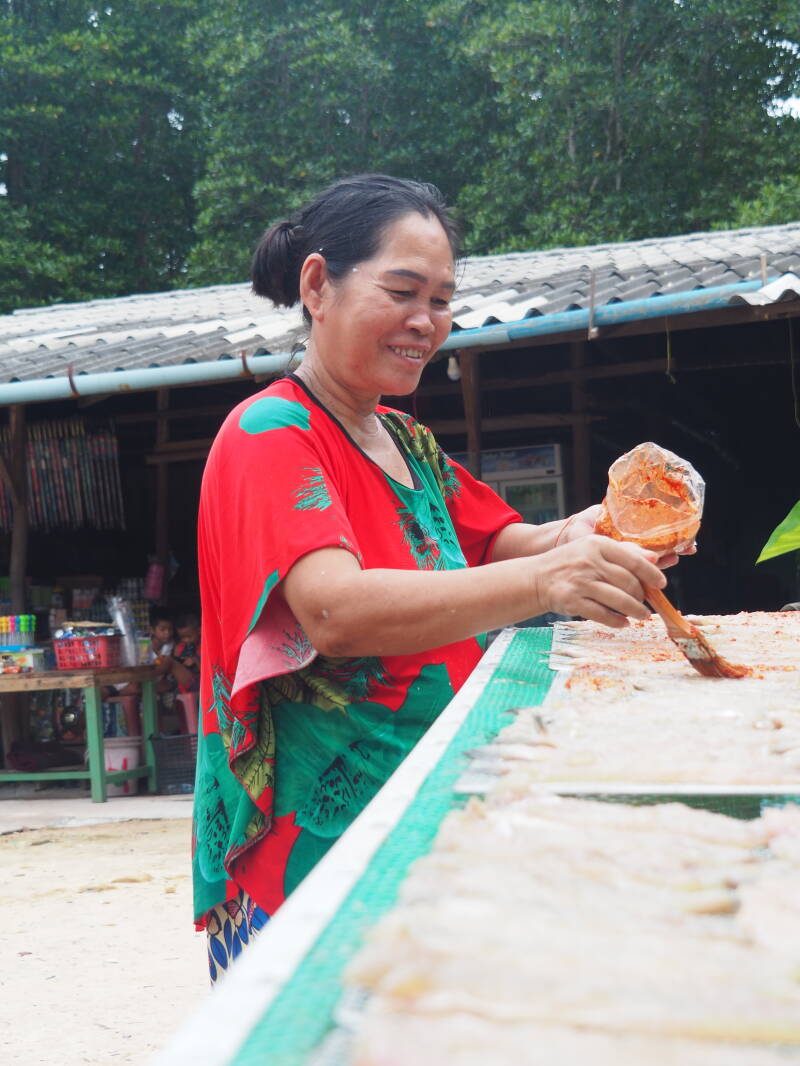
© Justine Clenet
Femme appliquant des épices sur du poisson en train de sécher tout en surveillant ses enfants, 2023 - Woman applying spices to drying fish while keeping an eye on her children, 2023
Women in the Early Khmer Societies
In pre-Angkorian societies, women appear to have held an important place within families and social structures. Some historical evidence and traditional accounts suggest that systems of lineage and inheritance may have been passed down through women.
The figure of Queen Soma, associated with the founding stories of the Kingdom of Funan, is one example of this symbolic role. In traditional accounts and legends, women can thus appear as figures at the origin of political power and dynastic continuity.
During the Angkorian Era: Women Were Highly Visible, but Society Was Hierarchical
Between the ninth and fifteenth centuries, women were widely represented in Khmer art and religion. The temples of Angkor alone reveal the importance of women in the imagination and culture of the period.
The Apsaras, celestial female figures carved into the walls of the temples, embody beauty and grace within Hindu cosmology. But beyond these religious representations, some women also held significant positions in society. Inscriptions found at the temples mention women who owned land, engaged in trade, or held religious responsibilities.
Social reality, however, remained highly hierarchical and cannot be reduced to a simple opposition between men and women. A woman’s status varied according to her social background, occupation, and historical period.
The Weight of Tradition
With the spread of Theravada Buddhism from the fourteenth century onward, which gradually became the dominant form of Buddhism in Cambodia, ideas about the role of women also evolved. In traditional society, women were strongly associated with family life and managing the household, while their access to education was very limited.
This view is reflected in the Chbab Srey, a traditional text describing the behaviour expected of women. It emphasises modesty, discretion, and a woman’s role within the household. It also advocates obedience to one’s husband, with women expected to respect him and contribute to his happiness. One Khmer proverb expresses this idea through the image: “Girls do not have legs as long as boys. They can only walk around the cooking stove.”
For a long time, these teachings formed part of the education of young girls. Some passages from the Chbab Srey were even taught in schools until the early 2000s.
However, these traditions are more nuanced in practice. In many families, women have long played an active role in the family economy, trade, and agriculture, and their contribution has extended far beyond the role of homemaker.
From the French Protectorate to Independence
During the period of the French protectorate, girls’ access to education remained limited, and women had little presence in public life. Following independence in 1953, progress was made, particularly in access to education and employment, although women largely remained confined to traditional roles. These developments were abruptly interrupted by the political upheavals of the 1970s.
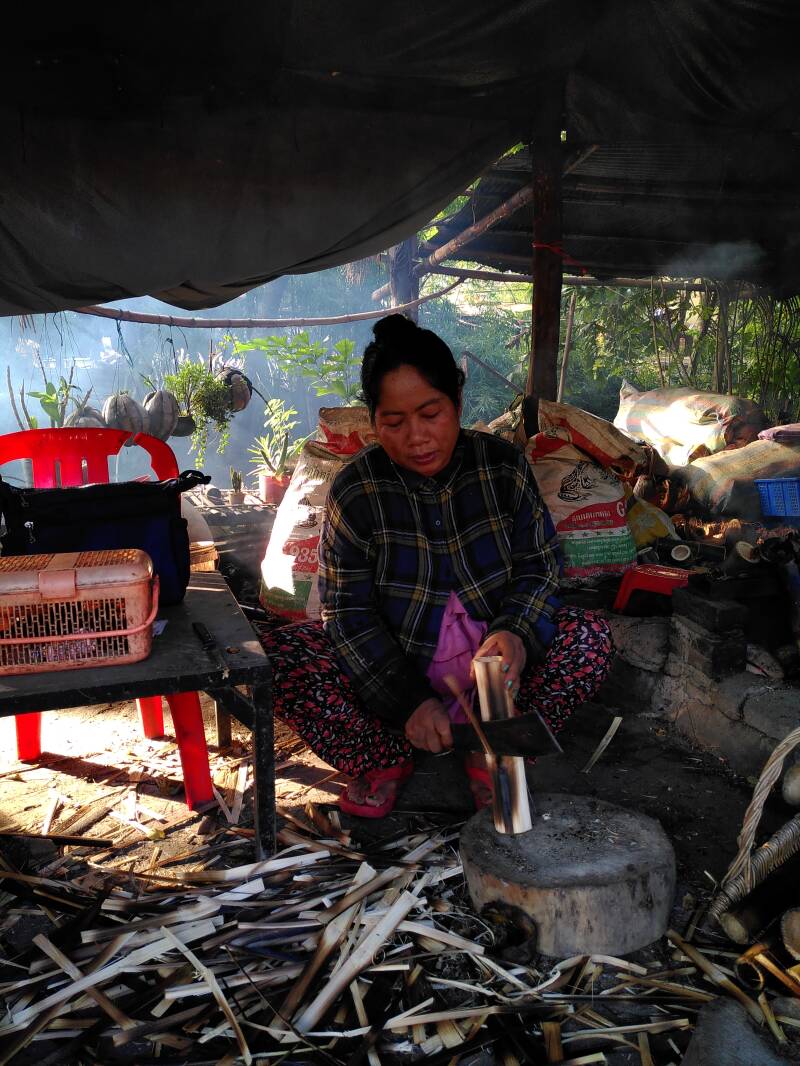
Femme cuisinant des stick de riz gluant à la banane pour les vendre dans la province de Battambang, 2023 - Woman cooking banana-filled sticky rice sticks for sale in Battambang province, 2023
A Generation Shaped by the Khmer Rouge
Under the Khmer Rouge regime, between 1975 and 1979, women and men alike were subjected to forced labour and the extremely harsh conditions imposed by the regime. Family structures were profoundly disrupted, and even marriage itself was controlled by the authorities.
Women also experienced forms of violence specific to their gender, including sexual violence, the full extent of which has long been difficult to document. This period left deep scars on Cambodian families and society.
After 1979, the country had to rebuild its institutions, education system, and social structures. The generations that followed therefore grew up in a society where traditions inherited from the past coexisted with the need to rebuild after decades of conflict.
Cambodian Women Today
Today, women play a major role in Cambodia’s economy. They are particularly active in trade, self-employment, handicrafts, agriculture, and the garment industry. Increasing numbers of women are also gaining access to higher education and positions of responsibility.
Progress, however, remains uneven. Women are still overrepresented in informal and lower-paid employment, while they remain underrepresented in senior leadership positions and national political institutions. As of February 2024, women held 13.6% of seats in Cambodia’s parliament.
Social expectations also continue to shape women’s everyday lives. The division of domestic work remains highly unequal: according to UN Women data, women in Cambodia spend a considerably greater share of their time on unpaid domestic work and care than men.
Violence against women also remains an important issue. Cambodia has had legislation on the prevention of domestic violence and the protection of victims since 2005, but prevention, access to support services, and the implementation of these measures remain ongoing challenges for institutions and civil society organisations.
At the same time, attitudes are changing. New generations of women are pursuing their education, developing their own careers and businesses, and increasingly making their voices heard in public life. Recent programmes have also encouraged changes in family and educational practices, promoting relationships based less on authority and physical punishment.
Observing the place of women in Cambodia therefore means discovering a society caught between heritage and transformation. Traditions remain deeply present, but they are gradually being reinterpreted by a new generation seeking its own way to live, work, and take its place in society.
Ajouter un commentaire
Commentaires